Is the era of a borderless internet coming to an end? The original vision of the internet was of a decentralized, open network for individuals to communicate and access information freely with minimal centralized control and reduced reliance on powerful gatekeepers. However, the rise of the so-called splinternet, a term used to describe the growing fragmentation of the global internet, threatens that vision.[1] As states continue to regulate, restrict, and control the internet, new digital borders arise. These borders vary in purpose and severity, ranging from controlling where data can be stored and how it crosses national boundaries to preventing citizens from accessing information altogether. Despite their differences, together they splinter the founding principle of a single, open internet.
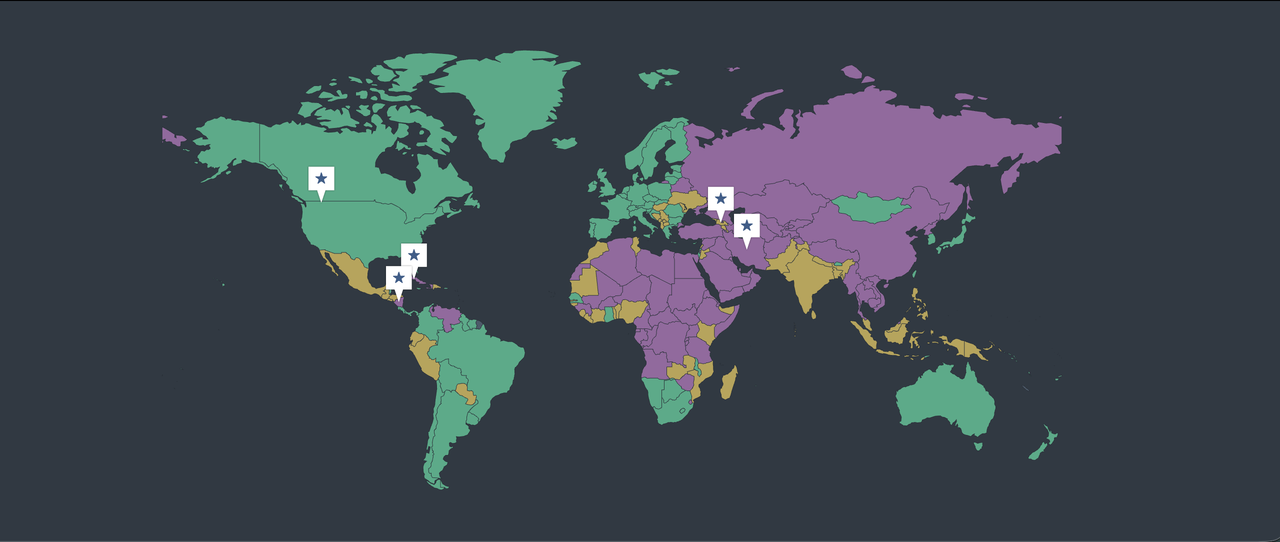
Censorship and Control
The splinternet is not a far-off, dystopian future but rather an increasingly visible global reality. One of the clearest signs of the splinternet in action is the growing ability of governments to control what information citizens can access online. One of the most famous examples of this is the Great Firewall of China. If the Great Wall was built to guard China’s physical borders, the Great Firewall was built to guard its digital ones. The system is used to restrict access to the global internet within Chinese borders, contributing to such a heavily filtered environment that some have compared it to a Chinese intranet.[2]
While not the only country to implement infrastructure-level blocking, China stands out for the scale and technical sophistication of its censorship system. Because most global internet traffic enters and leaves China through a limited number of terrestrial connections, authorities can apply filtering systems at these key entry points. These systems can block entire domain names and IP address ranges, scan traffic for flagged words or phrases, and redirect certain requests before users reach their intended websites.[3] This leads to widespread blocking of both illegal information and content that would be legal under Chinese law, demonstrating how China not only removes individual posts, but interferes with the traditional website-to-user pipeline.
The significance of the Great Firewall extends, ironically, beyond the borders of China. It serves as a prime example of how governments can reshape the internet within their own borders, creating online experiences that differ dramatically from those elsewhere in the world. Rather than coexisting in a single global network, users are increasingly inhabiting separate digital environments governed by their own rules, restrictions, and sources of information.
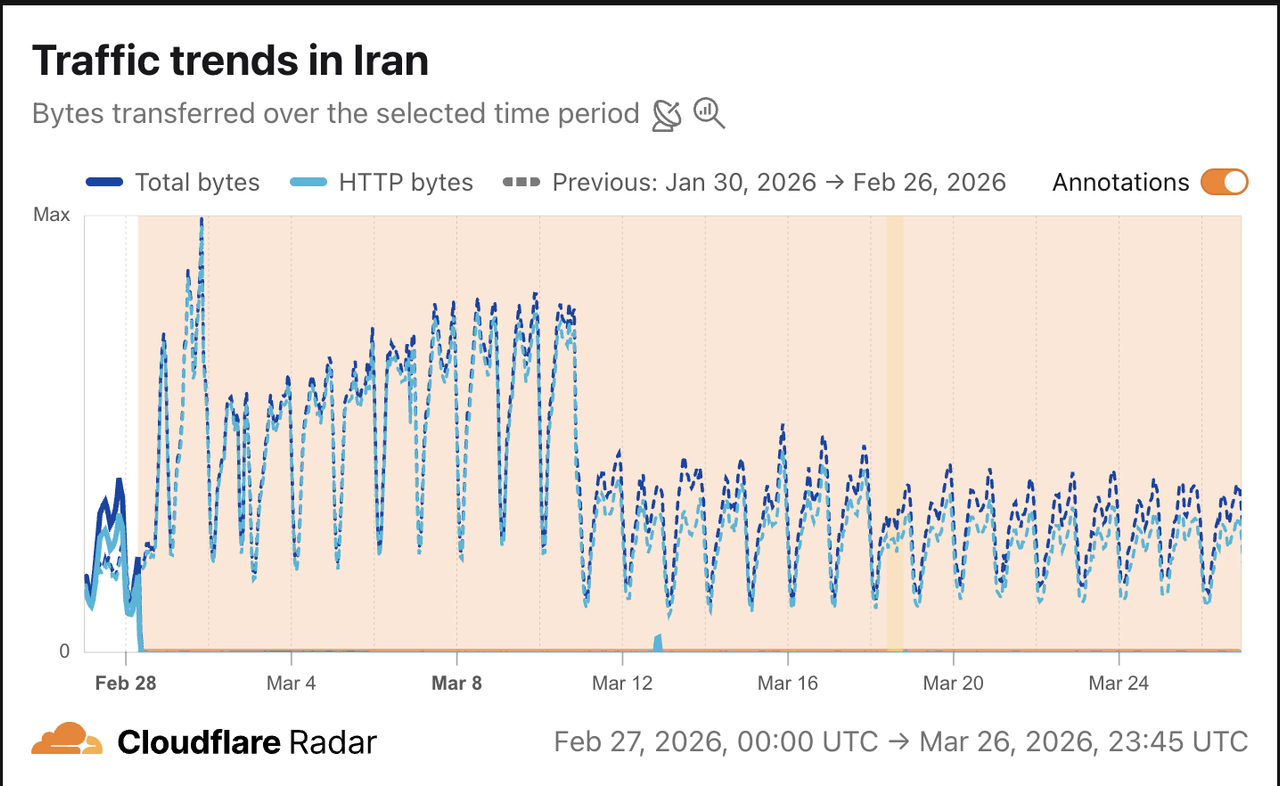
While the first major phase of the Great Firewall was completed in 2003[4] with roots stretching back to 1996,[5] other nations have begun erecting their own digital borders through different forms of control. China’s Great Firewall represents a permanent system of filtering, while other governments have created digital borders more suddenly by shutting down internet access during periods of crisis. During periods of political and military turmoil, Iran, for example, has repeatedly implemented internet shutdowns and restrictions, limiting citizens’ access to outside information and communication. Authorities imposed a nationwide shutdown during anti-government protests in January 2026.[6] After access had been restored for only about a month, a second blackout began following the launch of U.S. and Israeli attacks on February 28. It severely restricted Iran’s connectivity to the global internet for nearly three months, resulting in one of the longest national internet shutdowns ever recorded.[7]
These blackouts demonstrate how, by controlling digital infrastructure, governments can retain influence over political narratives, restrict communication, and limit access to outside information, isolating populations from the wider online world. According to Access Now and the #KeepItOn coalition, at least 313 internet shutdowns occurred across 52 countries in 2025.[8] China and Iran are not isolated cases. With internet shutdowns and censorship becoming cheaper and easier to impose, governments all over the world are increasingly taking control of the digital sphere.[9]
Data Localization and Digital Sovereignty
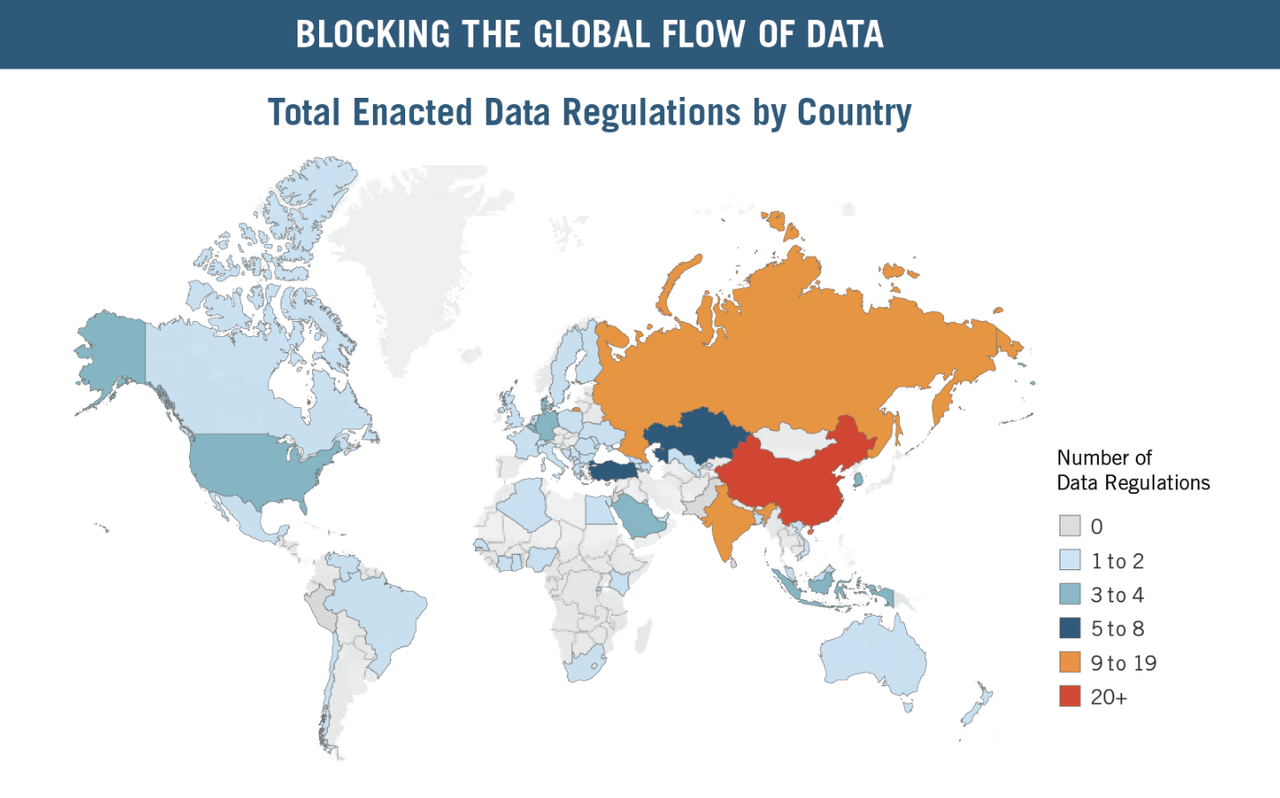
Censorship and shutdowns create highly visible digital borders by controlling users’ connection to the internet. However, governments also create more subtle borders by regulating where data can be stored, who may access it, and how it can move between countries. Such policies reflect the principle of data sovereignty: the idea that a country can assert legal control over how its citizens’ and inhabitants’ data is stored, used, and transferred.[10]
Governments argue that data, like money and energy, is a valuable resource that needs to be protected. As the world becomes increasingly dependent on digital infrastructure, control over data has become a matter of privacy, security, and political power. Storing sensitive information on servers located in foreign countries can subject governments, businesses, and citizens to foreign laws and surveillance.[11] As a result, policymakers around the world have begun to treat control over data as much a political issue as a technological one.
Under Russia’s Federal Law No. 242-FZ, for example, certain personal data belonging to Russian citizens must be stored using databases located within Russia.[12] The European Union takes a different approach through GDPR. Rather than requiring all personal data to remain inside Europe, GDPR allows transfers outside the European Economic Area only when specific privacy protections and legal safeguards are in place.[13]
While supporters argue that such measures protect citizens and strengthen national sovereignty, critics point out how they create additional barriers to the free flow of data that contribute to the fragmentation of the global internet. Unlike direct censorship, data sovereignty presents a more nuanced debate with legitimate arguments on both sides. While a privacy safeguard is not equivalent to an internet shutdown, both types of digital borders demonstrate how geography and national law increasingly shape where information can travel, placing new boundaries around a network once imagined as borderless.
One Internet, For How Long?
Can the global internet survive the splinternet? Or will we be left with just the splinters? While it is unlikely that the entire global network will up and disappear, the experience of using it is becoming increasingly dependent on a person’s geographical location. Many types of digital borders exist: some determine which parts of the internet people can access, while others regulate where and how their data may travel. The question is no longer whether the internet will fragment; it already has, and it is likely to continue doing so. The remaining question is how uneven and restrictive that fragmentation will become. As governments treat cyberspace as territory to be governed like the physical world, the challenge shifts from preserving a borderless internet to understanding what kinds of borders, and whose borders, will ultimately define our digital future.