I am a computer scientist. What do I look like? Your first guess is probably a man: thin, pale, glasses, maybe hunched over a glowing screen. The Hollywood computer geek. In 1945, you would have been wrong.
You may be shocked to learn that the first programmers were women, not men. At the time, this was not unusual, but it was also not a victory for women’s equality. While World War II in the United States is often described as a turning point for women’s rights, the reality is more complicated. Wartime labor needs opened technical fields to women, but only through classifications that already defined that work as secondary, temporary, and feminine. This structure shaped early computing itself. Women entered the field not because gender barriers were removed, but because computing work was initially treated as an extension of clerical labor. That classification made their participation possible during the war and dispensable afterward. When computing became professionally valuable, the same system that allowed entry also enabled exclusion, reshaping the field into the masculine discipline recognized today.
Women Enter the Control Room
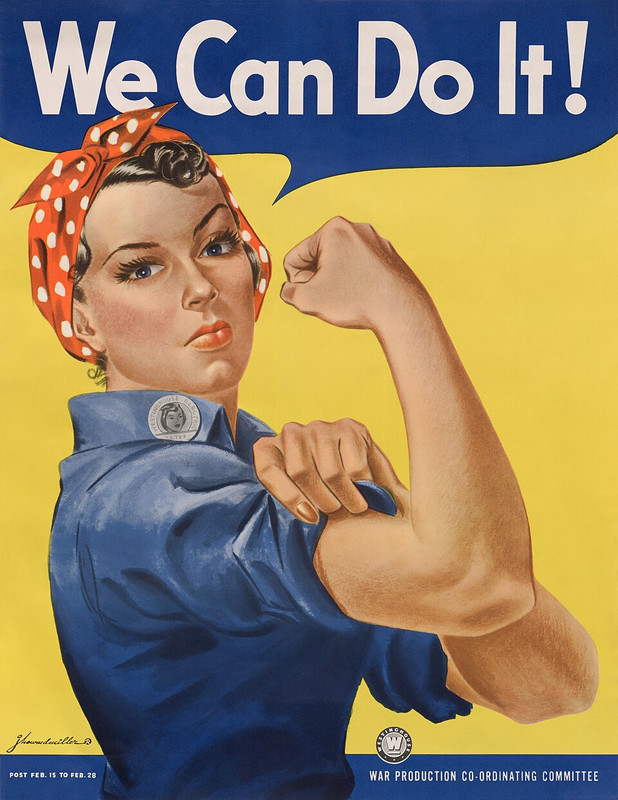
World War II created labor shortages that pulled women into many wartime industries, but their entry was always filtered through existing gender expectations. Women were not entering a gender-neutral workforce. They were entering as women, into roles already defined as socially acceptable for them.
Following the United States’ entry into the war in 1941, women were encouraged to fill positions left by men serving overseas. Wartime messaging framed this shift as unprecedented opportunity, particularly in what one source called “the most technical of all wars.”[1] But the structure of that opportunity remained constrained. As Janet Abbate notes, wartime labor was still governed by preexisting power relations, meaning “the same cultural attitudes, priorities, and power relations that had excluded women and minorities from certain occupations before the war were still in play.”[2]
One key mechanism was reclassification. Work became “women’s work” only after being redefined as repetitive, routine, or less intellectually prestigious. This process, often described as labor feminization, did not simply assign women new jobs. It lowered the perceived status of the work itself in order to make female participation acceptable. By the middle of the war, this logic produced a category of feminized technical labor in which early computing first developed.
The ENIAC Six: The Real Computer Brains
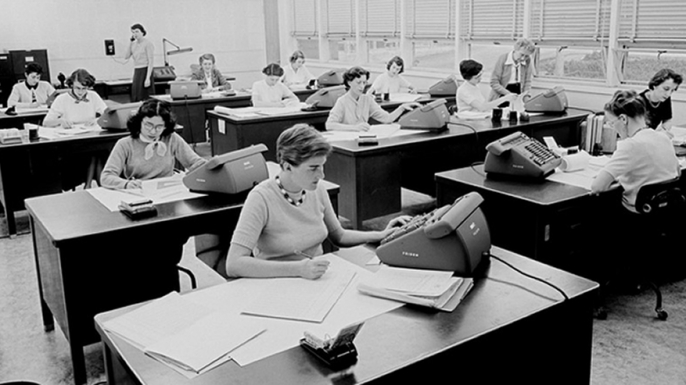
Computing during World War II grew directly out of this system of reclassification. The “female computer” role emerged when mathematical calculation work was reframed as clerical labor rather than intellectual expertise.[3] Ballistic computation, once associated with scientific authority, was redefined as procedural repetition.[4] This redefinition made women the ideal workforce for computation. Engineers were redirected toward design and theory, while women handled execution and calculation.[5]
Many of these women were highly educated mathematicians, not unskilled laborers. As machines became central to wartime computation, their roles expanded beyond manual calculation. They began configuring early computational systems and translating mathematical problems into machine operations.[6] Yet the classification of their work did not change with its complexity. Ballistic computing occupied an unstable position between scientific reasoning and clerical labor.[7]
This ambiguity shaped the development of ENIAC, where early programmers were drawn from women already working as human computers. Programming itself was not initially recognized as a distinct technical profession. It was treated as an extension of operator labor, even though it required deep understanding of machine logic and structure. ENIAC programming involved learning circuitry, wiring, and system behavior while translating mathematical problems into physical machine configurations.[8]
This expertise was often acknowledged informally but not institutionally. Betty Jean Jennings later noted that programmers could “diagnose troubles as well as, if not better than, the [engineers]”.[9] Despite this, authority remained tied to engineers rather than operators. A developing distinction between hardware and software reinforced this divide. Hardware was defined as engineering, while software was framed as instruction and execution. Into this emerging separation, existing assumptions about gendered labor were embedded. Because women were already associated with clerical work, programming was categorized accordingly, regardless of its technical demands.
And Now It’s a Boys’ Club
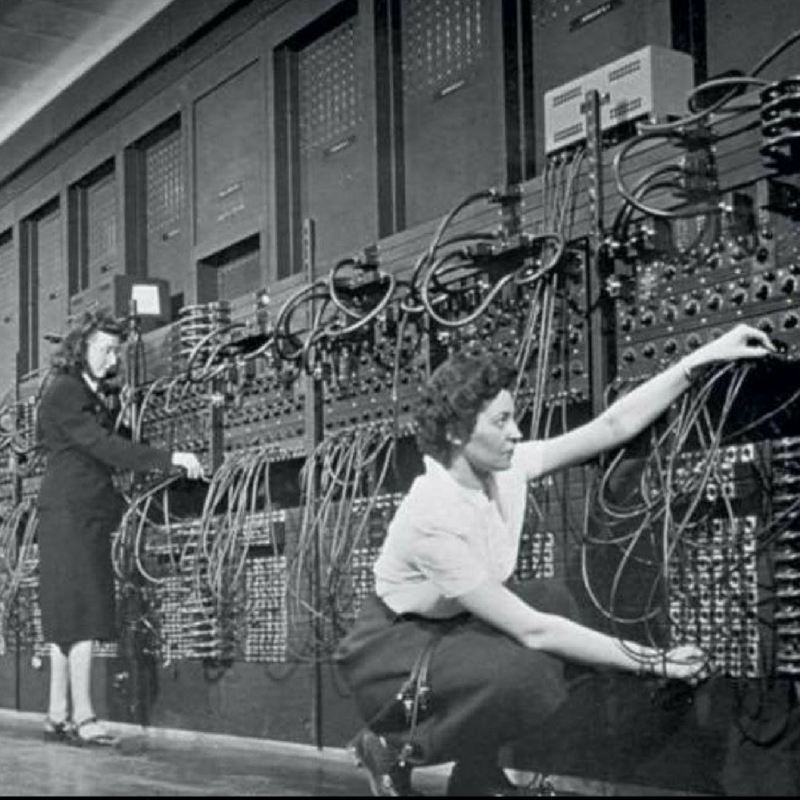
After World War II, the conditions that enabled women’s participation in computing disappeared. The labor shortage ended, and computing transitioned from wartime necessity to formal discipline.[10] As the field professionalized, it also became structured and hierarchical. Early postwar computing publications reinforced a division between planning and coding, separating conceptual design from machine instruction.[11] This split created a hierarchy of value. Planning was defined as intellectual work, while coding was defined as mechanical execution.
What had been continuous technical labor during the war was reorganized into stratified roles. As Ensmenger notes, this division aligned with broader institutional hierarchies that linked authority to abstraction and management rather than execution.[12] The flexibility of wartime labor became postwar stratification.
Women who had been central to early computing were largely excluded from this professional transition. As computing became standardized through formal education, job categories, and institutional authority, their contributions were minimized or reclassified as support work. Heurich notes that this consolidation embedded assumptions about expertise and authority directly into the structure of the field itself (Heurich, 128).[13] The result was not simply exclusion in practice, but exclusion built into definition.
So What…?
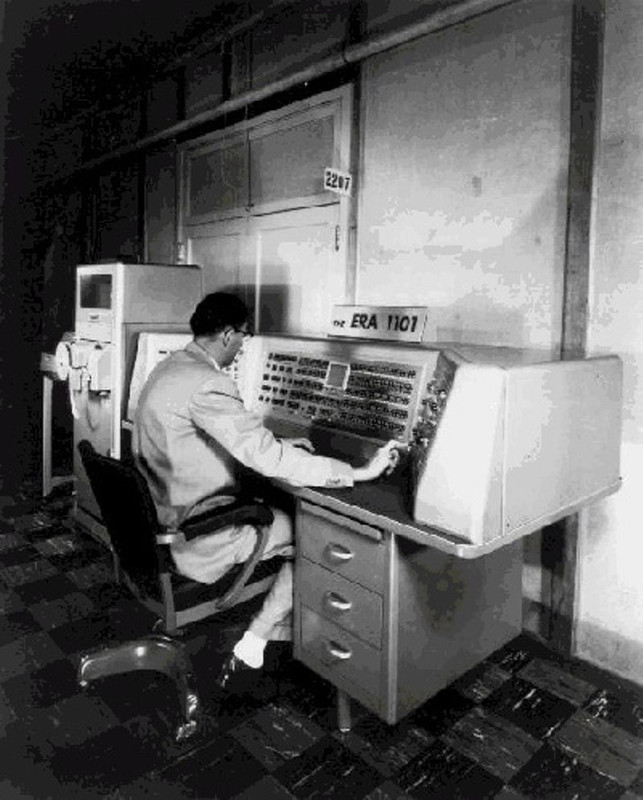
The history of women in early computing is not a story of progress interrupted. It is a story of access structured through devaluation. Women entered computing because the work was defined as temporary, auxiliary, and feminized. That definition made their labor visible and usable during wartime conditions. But when computing gained institutional and economic value, those same definitions became mechanisms of exclusion.
The issue was never ability. The work of early programmers demonstrates technical expertise that matched or exceeded that of their male counterparts. The issue was recognition, which was never part of the conditions under which women entered the field.
This pattern extends beyond computing. Professional access is often granted when labor is undervalued and withdrawn once that labor becomes central to economic or institutional power. The postwar transformation of computing did not reverse women’s participation by accident. It stabilized a gendered structure already embedded in how technical work had been defined from the beginning.